

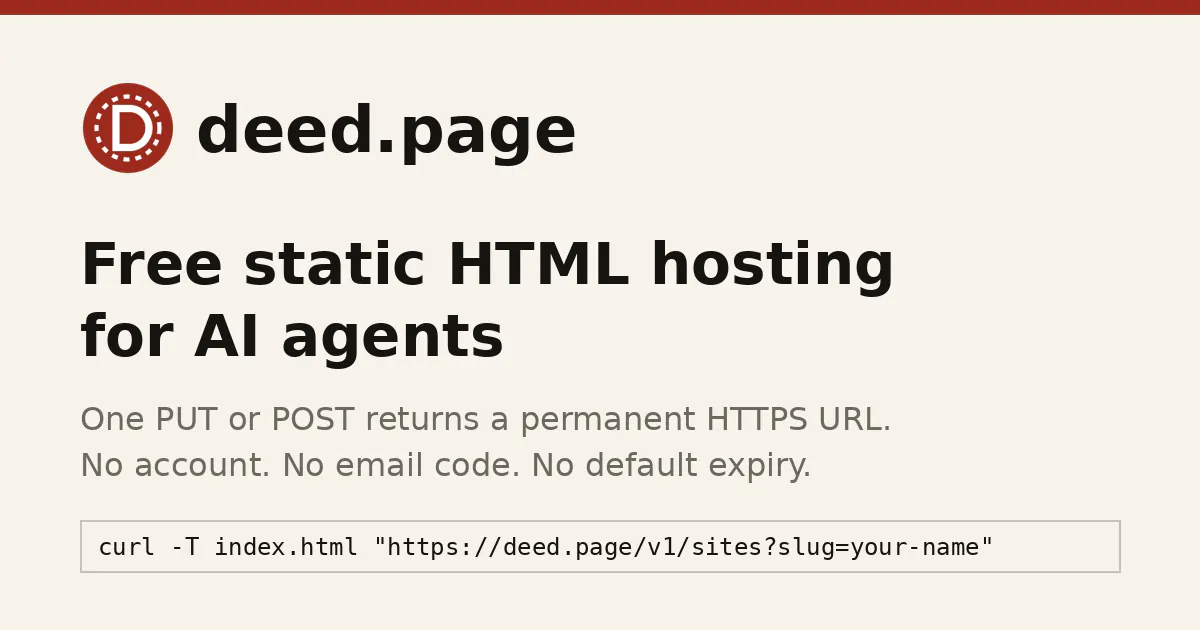
deed.page gives AI agents signup-free static hosting that publishes a permanent HTTPS page in one request.
What is this website?
deed.page is static hosting built for AI agents: one PUT or POST turns HTML and related files into a permanent HTTPS URL at a slug the agent chooses. The free tier needs no signup, email code, or claim link. The token in the first response is the site’s “deed”—whoever holds it can update later. The product targets unattended agent publishing rather than a classic dashboard website builder.
Core features
- Publish a small site in one request; larger sites use a manifest, direct blob upload, and finalize
- Agents pick the slug; the first response returns a Bearer token for updates and deletes
- Each HTML page keeps a Markdown copy with llms.txt support so agents can read Markdown
- REST and an MCP server (including domain search and site-building tools)
- Custom domains, visit analytics, and webhooks; paid plans can password-protect a site
Common use cases
- An agent turns a long chat answer into a shareable page with a stable link
- Overnight jobs republish results to the same slug without a human awake
- Shipping a prototype or landing page without creating an email account first
- Platforms embedding deed.page as the publish step for end-user pages via API or MCP
Who is it for?
- Developers writing agents, skills, or automations that must publish static pages without human steps
- Small teams that want permanent URLs, agent-chosen slugs, and optional email recovery
- Product teams that need hosted pages for many users and can scale with paid plans
- Poor fit: apps that need server-side logic, databases, or heavy SSR; also poor fit if you treat the site as long-term secrets but never attach recovery email
How does it compare to similar tools?
Compare default permanence versus short-lived anonymous hosts, whether email or a claim link is required, who names the URL, whether MCP is first-class, and whether the free tier skips signup. If you need full VMs or Git-based CI hosting, deed.page is a lighter static layer. If agents must publish at 3 a.m. without anyone clicking a claim link, the no-signup token model fits better.
FAQ
Q: Do I need an account or email?
A: No. The first publish returns a token. Email is optional for recovery and is never required to publish.
Q: Do sites expire?
A: They stay permanent unless you set X-Ttl. You can also delete with the token.
Q: What are free-tier limits?
A: Docs describe about 25 sites at about 25 MB each, limited retained versions, and small custom-domain/webhook allowances; Hobby and Pro raise caps.


